
|
Important Information Regarding Programs and Autographs at Comic-Con
All event and program rooms have limited capacity as set by the Fire Marshal. Even though your badge
is needed to get into all events, it does not guarantee you access to any event if it has reached its
capacity. We do not clear rooms between events. Most autograph signings are of a limited nature.
Your badge does not guarantee autographs at any event.
|
|
Comic-Con Icon Award
And The Icon Award Goes to...George Lucas
Photo by: Jason Merritt/FilmMagic
© 2008 FilmMagic
The focus of Comic-Con has always been the popular arts. With an emphasis on
comics and their creators, fantasy literature, and film, the event has become
the hallmark of everything that is cool in pop culture.
A common and somewhat frustrating misconception is that Hollywood only recently
discovered Comic-Con. But long-time attendees know that movies have been a major
part of the show since its inception.
For instance, in Comic-Con's early days, famed directors Frank Capra and George
Pal were among the guests, However, Hollywood's participation reached a new
level in 1976. It took what was at the time a small film studio with a big film
to promote to change the way Hollywood viewed the convention and perhaps more
important, fans themselves.
It was the idea of George Lucas to send down the company's public relations
person, Charlie Lippincott, to promote his new film Star Wars. A full year
before the world would see this epic adventure, fans at Comic-Con were treated
to an exclusive look at the movie, with the first-ever Star Wars panel. In
addition, writer Roy Thomas and artist Howard Chaykin were on hand to talk about
Marvel's Star Wars comic book, and Lucasfilm sold (for $1.50) preview movie
posters drawn by Chaykin.
Recognizing and utilizing "viral marketing" long before it was a catchy
marketing phrase, Lucas harnessed the power of the fan community to build
grassroots interest in his upcoming movie. And it wasn't long before other
Hollywood studios got the idea that Comic-Con would be a good place to reach
their target audience.
With the two subsequent Star Wars films, Lucasfilm returned to Comic-Con to
promote it and screen the previous films. More recently the studio has been a
fixture in the Exhibit Hall with the massive Lucasfilm Pavilion and in programs
that give fans the lowdown on all things Lucasfilm oriented; in fact, Friday has
been "Star Wars Day" in the CCI programming schedule for several years now. In
2004 Lucasfilm even chose Comic-Con as the place to announce the title Revenge
of the Sith as the last film in the saga.
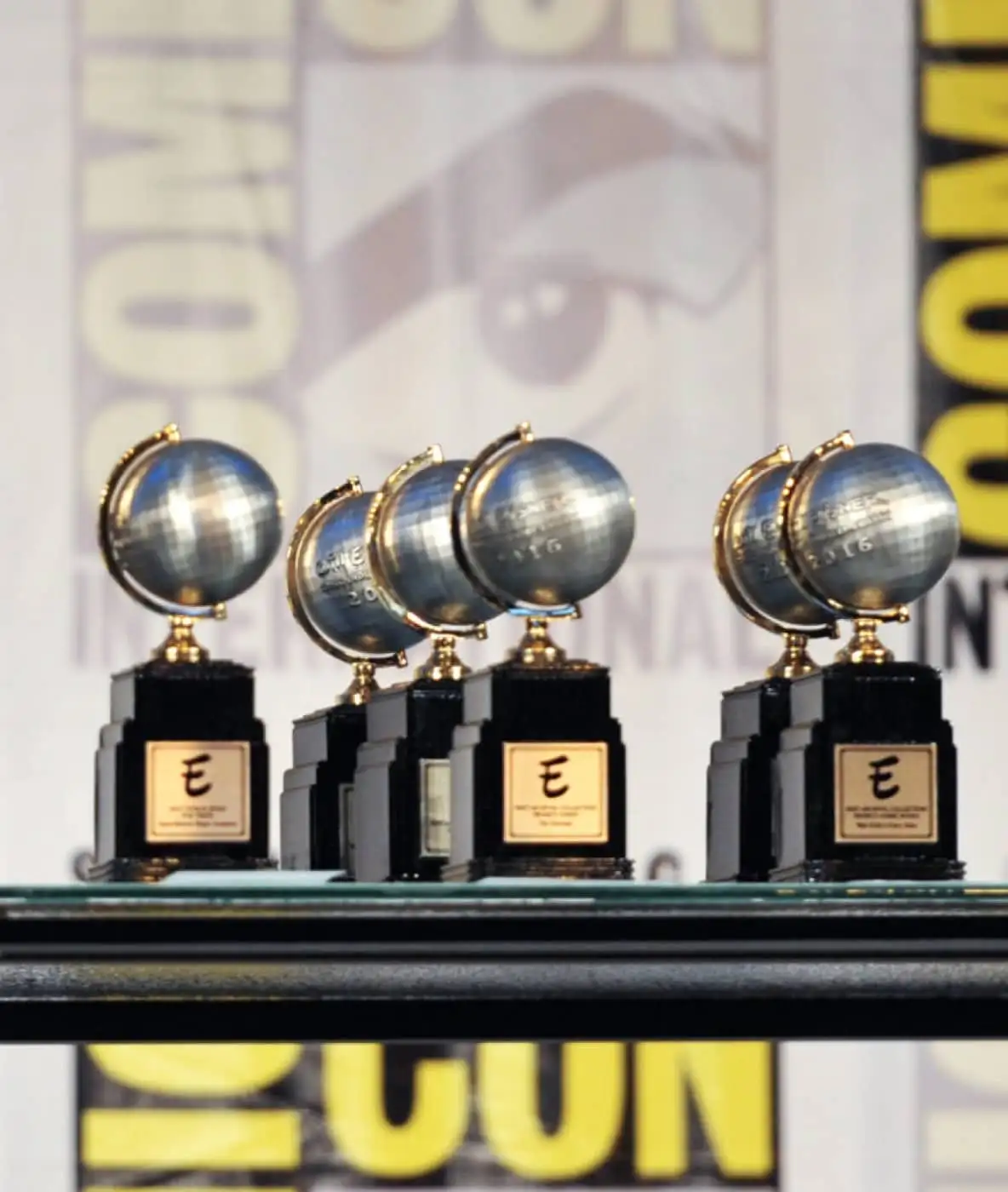
Since 2006, Comic-Con has presented its Icon Award to an individual or
organization who has been instrumental in bringing comics and/or popular arts to
a wider audience. For recognizing the devotion of the fan community and by
entering into a dedicated partnership with them in a grassroots effort to reach
a wider general public, George Lucas was presented with the 2008 Icon Award on
national television on Spike TV in October. Lucas is the first non-comics
creator to be awarded this honor.
At the ceremony Lucas, a comics fan himself, thanked Comic-Con and paid tribute
to the science fiction films and television shows that inspired him, as well as
the artists and creators who helped stir his imagination. Lucas is the third
recipient of the Comic-Con Icon Award. Frank Miller received the first award in
2006, and Neil Gaiman was the recipient in 2007.
Past Icon Award Recipients
George Lucas (2008), Neil Gaiman (2007), Frank Miller (2006)
|